Child and Youth Counselling in Coquitlam | Bright Minds Counselling
Your child is told they can’t have another snack, and suddenly they’re screaming, crying, or yelling that you’re the worst parent in the world. Maybe a sibling touches their belongings, a screen needs to be turned off, or you ask them to get ready for school. What seems like a small request turns into a major meltdown.
If this sounds familiar, you might be wondering why your child reacts so strongly to things that seem relatively minor. You may even find yourself thinking, They know better than this. Why are they acting this way?
After more than 4,200 hours of clinical experience working with children and teens, one of the biggest things I want parents to understand is this: a child’s anger often tells us more about what they are struggling with than what they are trying to do to us.
Understanding what is happening beneath the behaviour can change how we respond, how our children experience us, and how they gradually learn to manage their emotions.
1. Your child may not yet have the skills you expect them to have
One of the most common challenges I see is that adults expect children to respond with a level of reasoning, patience, and emotional control that they haven't yet developed.
We sometimes forget that children are still developing the brain systems responsible for impulse control, flexible thinking, planning, and managing strong emotions. These abilities develop gradually throughout childhood and adolescence.
For example, I've worked with parents who wanted their five-year-old to sit politely at the dinner table for an extended period while entertaining guests. But a young child may only manage a short period of sitting before needing to move, play, or have a break.
The solution isn't necessarily to teach the child to behave better. Sometimes, we need to adjust our expectations to match the child's developmental stage.
This applies to following instructions, waiting patiently, managing disappointment, and transitioning between activities, too.
A child who struggles to stop playing immediately may not be deliberately disrespectful. They may need more preparation and help shifting their attention. A child with ADHD may need instructions broken down into one step at a time rather than being expected to remember several things at once.
When we expect skills a child hasn't yet developed, we can end up in a cycle of repeated demands, frustration, and conflict.
The question to ask is not just, “Why won't my child do this?” It's also, “Is my child developmentally ready to do this, and what support would help?”
2. What looks like anger may be hiding another feeling
Anger is often the emotion adults notice first, but it isn't always the whole story.
Sometimes, a child is feeling overwhelmed, disappointed, anxious, excluded, misunderstood, or disconnected. They may feel that their opinions don't matter or that they have very little control over what happens in their world.
Younger children, in particular, don't always have the language to explain these experiences. Instead, their feelings come out through their behaviour.
A child who screams when a parent says no might be struggling with disappointment and frustration. Another child might react intensely to a minor correction because they already feel that they're always getting things wrong. A teen who becomes angry over a seemingly insignificant comment may be carrying the stress of feeling different from their peers or left out socially.
These are possibilities to explore, not assumptions about every child.
I often encourage parents to become curious about the message beneath the behaviour. What happened immediately before the outburst? Has something changed recently? Does your child feel heard? Are they tired, overwhelmed, worried, or struggling with something they haven't told you about?
Sometimes what we call attention-seeking is better understood as connection-seeking.
Children need to know that they matter, that their feelings are taken seriously, and that they can turn to their caregivers when things feel difficult. When they don't know how to ask for that connection directly, their behaviour may become the way they communicate it.
3. Children learn emotional regulation by watching us
We often tell children to calm down, use their words, or take a deep breath. But how often do they see us doing those things ourselves?
Children learn a great deal about managing emotions by observing the adults around them. Our tone of voice, facial expressions, reactions to stress, and responses to frustration all contribute to what children learn about emotions.
If a parent has had a difficult day and responds to every small frustration with irritation, a child may become more reactive, too. This isn't about blaming parents. Adults have difficult days, and nobody regulates perfectly all the time.
What matters is helping children see that difficult emotions are manageable.
I once worked with a family whose seven-year-old was experiencing frequent meltdowns and was becoming increasingly defiant toward both parents. The parents were understandably concerned about the behaviour and wanted to improve discipline.
As we explored the situation, we discovered several important factors. The parents were going through a separation, the household had experienced considerable stress, and the younger child was being held to expectations similar to those of her older sibling, who was several years ahead developmentally.
The parents had not openly discussed the separation in front of the children, but children can often sense changes in family relationships and routines even when adults believe they are keeping things hidden.
One of the most helpful shifts for the mother was learning that showing emotions wasn't the problem. She had believed that showing frustration in front of her children was something she should avoid altogether.
Instead, we explored how she could model the full cycle of regulation.
For example, she could say, “I'm feeling frustrated because today has been a really busy day. I'm going to take a minute to breathe and settle myself.”
Then, once she felt calmer, she could say, “That helped. I'm feeling better now.”
Her child could see that frustration is a normal emotion, that it doesn't have to lead to an outburst, and that there are ways to work through it.
The goal isn't to be a perfectly calm parent. It's to show children what happens when we aren't calm, and how we can find our way back.
4. What should you do when your child is in the middle of a meltdown?
Imagine your six-year-old asks for another snack shortly before dinner. You say no, and they begin screaming, “You're the worst parent ever!”
Your first instinct might be to explain why they can't have another snack, remind them how they should speak to you, or insist that they stop immediately.
But when a child is highly distressed, their ability to listen, think flexibly, and process explanations may be significantly reduced. Trying to reason with them at the height of the outburst can make the situation more difficult.
Instead, focus first on helping your child settle.
Try these four steps:
1. Regulate yourself first.
Lower your voice, relax your body, and slow down your responses. If you feel yourself becoming overwhelmed, take a breath before speaking. Your child doesn't need you to feel perfectly calm inside, but your response can help keep the situation from escalating.
2. Acknowledge the feeling without changing the boundary.
You might say, “You really wanted another snack. It's frustrating when you want something and the answer is no.”
You can validate disappointment without giving your child everything they ask for. The boundary can remain the same.
3. Stay present and keep everyone safe.
When appropriate, remain nearby rather than isolating your child as a punishment for becoming upset. You don't need to keep talking or demand eye contact. Sometimes a calm, quiet presence is more helpful than a long explanation.
If your child is hitting, throwing objects, or hurting someone, calmly intervene to protect everyone. Supporting emotions does not mean allowing unsafe behaviour.
4. Talk about it later.
Once your child is calm and able to listen, help them make sense of what happened. You might say, “That was really frustrating earlier. What could help next time you feel that upset?”
The goal is to teach skills, not to shame a child for having emotions.
Children still need boundaries, guidance, and opportunities to learn more appropriate ways to express themselves. But they learn those skills more effectively when they are supported rather than overwhelmed by further conflict.
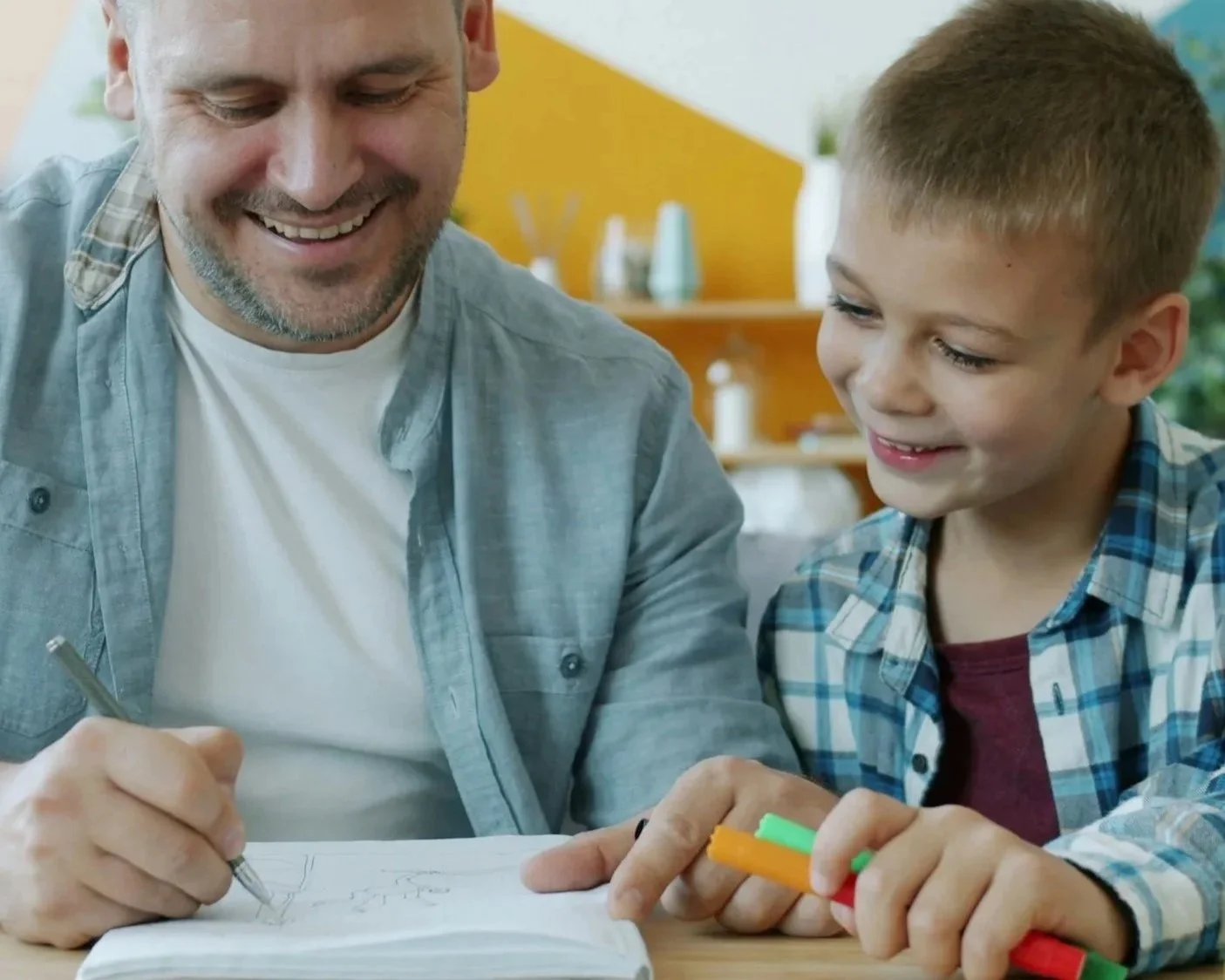
5. One of the simplest tools is dedicated one-to-one time
If there is one strategy I encourage parents to consider, it is regular, child-led one-to-one time.
This doesn't require expensive toys, elaborate activities, or hours of free time. Even a short period of focused, uninterrupted interaction can create an opportunity for connection.
Let your child choose an age-appropriate activity, such as building with blocks, drawing, playing with figures, or creating something together. Put distractions aside and allow your child to lead.
As they play, describe what you notice.
“You're building a really tall tower.”
“You chose the red block and put it right on top.”
Then add specific, genuine praise.
“I really like how carefully you're building that.”
“You kept trying even when the blocks fell over.”
This is called behavioural tracking and labelled praise. Rather than giving a general “good job,” you describe the specific behaviour you appreciate.
Research on parent-child interventions, including Parent-Child Interaction Therapy (PCIT), supports the value of strengthening positive parent-child interactions and increasing specific praise while reducing criticism. These approaches have been associated with improvements in parenting behaviours and child behaviour. Research summary.
In my clinical work, I have repeatedly seen how powerful these small interactions can be. Parents have told me that introducing child-led one-to-one time made a significant difference in their child's behaviour.
Why might it help?
Children receive our attention in many different ways throughout the day, but much of it involves correcting, directing, reminding, or managing behaviour. Dedicated time gives them an experience in which they don't have to compete for our attention or worry about getting things right.
They can simply connect with us.
And when children feel connected, noticed, and valued, we create better conditions for cooperation, communication, and emotional growth.
6. Could screen time be contributing to your child's anger?
This is an area I encourage parents to look at carefully.
In my clinical practice, I frequently explore children's use of digital devices, video games, and social media when parents describe frequent outbursts, difficulty with transitions, or struggles with emotional regulation.
Consider what happens when a child is deeply engaged in a game or watching videos. Their attention is absorbed, the activity is rewarding, and stopping may be difficult. When the device is suddenly removed, the transition can trigger an intense reaction.
That doesn't automatically mean your child is addicted or experiencing withdrawal. It does mean that screen-related routines, the content being consumed, the timing of use, and the child's ability to disengage are worth examining.
The American Academy of Pediatrics' 2026 policy statement on digital ecosystems highlights concerns about sleep disruption, highly engaging platform designs, and associations between digital media use and children's emotional regulation. It also recognizes that digital media can offer benefits, and that effects vary depending on the child and how the technology is used. American Academy of Pediatrics, 2026.
My clinical recommendation is to be especially cautious about introducing personal devices and social media too early. I encourage parents to consider delaying access to personal devices and social media until their child is developmentally ready, with a particularly cautious approach to social media through early adolescence.
If your child has frequent outbursts around screens, consider reviewing the family's digital media routines. Set predictable limits, give advance warnings before stopping, protect sleep, and make space for offline activities, movement, play, and face-to-face connection.
If the reactions are severe, don't assume screen use is the only cause. Anxiety, ADHD, developmental differences, family stress, sleep difficulties, and other factors may also contribute. A comprehensive assessment can help clarify what is happening.
7. When should you seek professional support?
Big feelings are part of growing up, and an occasional meltdown doesn't necessarily mean something is wrong.
However, consider seeking professional guidance if your child's outbursts are frequent, unusually prolonged, increasing in intensity, or interfering with school, friendships, family life, or everyday activities.
Pay particular attention if your child:
Has meltdowns that regularly last 30 minutes or longer.
Becomes physically aggressive or destroys things during outbursts.
Hurts themselves, bangs their head against a wall, or otherwise puts themselves at risk.
Seems persistently anxious, irritable, withdrawn, or overwhelmed.
Experiences a noticeable change in behaviour following a family transition or another significant stressor.
Prolonged tantrums, aggression, and self-injury are reasons to seek professional assessment; you don't need to wait for the behaviour to become unmanageable. AACAP guidance on temper tantrums.
When I meet with families, we often explore what was happening around the time the behaviour began. Sometimes a connection becomes clear only after looking more closely at changes in family relationships, routines, school experiences, or stress levels.
The goal isn't to label a child as difficult. It's to understand what they need and identify ways to help them and their family.
The most important question to ask when your child gets angry
When your child has another outburst, it's understandable to focus on the behaviour you want to stop. But try pausing to ask yourself two questions:
What is my child experiencing right now?
What skill or support might they need from me?
You can hold boundaries and teach appropriate behaviour while still recognizing that your child may be struggling with feelings they don't yet know how to manage.
Children develop emotional regulation over time, through practice, relationships, and the experiences they have with the adults who care for them. They don't need us to get everything right. They need us to keep learning alongside them.
How Bright Minds Counselling can help
At Bright Minds Counselling in Coquitlam, I work with children, teens, and parents to better understand emotional and behavioural challenges and build practical strategies that support regulation, communication, and connection.
Sometimes the most meaningful change begins not with asking a child to behave differently, but with helping the adults around them understand what the behaviour is communicating.
If your child's anger or meltdowns are becoming difficult to manage, child and youth counselling and parent support can help you understand the patterns and work toward a calmer, more connected family life.
Bright Minds Counselling | Coquitlam, BC